
dawei logo

Poultry Equipment: What a Farm Needs Before It Automates

A farm can buy good feeders, drinkers and fans and still end up with a difficult house to manage. The problem is often not one machine; it is the way equipment fits the flock, building, climate and daily routine.
When comparing poultry equipment, start with the work the system must do. A layer house needs reliable feed and water delivery, egg handling and manure management. A broiler house has different priorities, including brooding, litter conditions and air movement as birds grow. The right farm poultry equipment is the equipment that works together in your actual building—not simply the longest list of automated features.

The main poultry farming equipment groups
poultry equipment system

Feeding systems

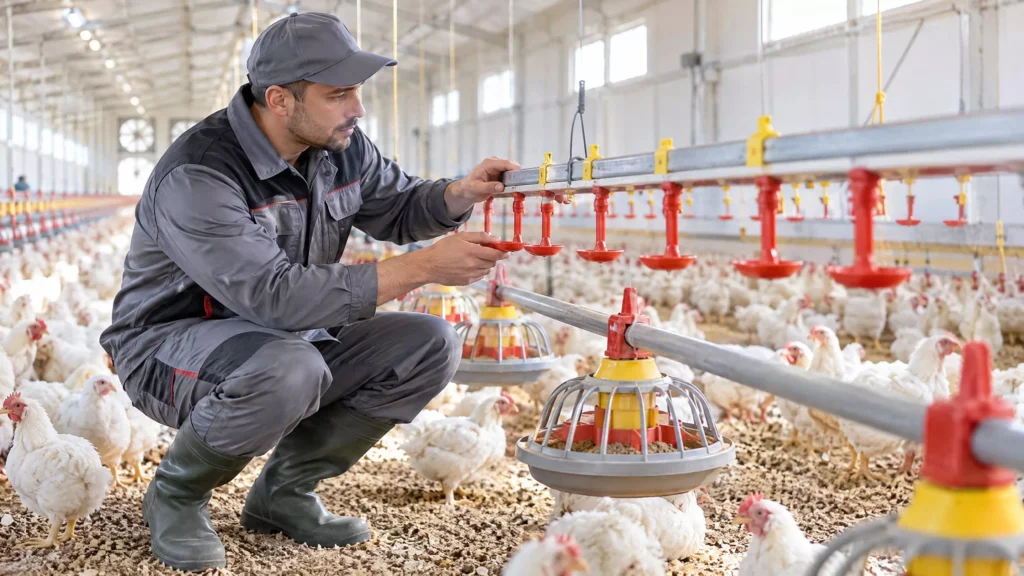
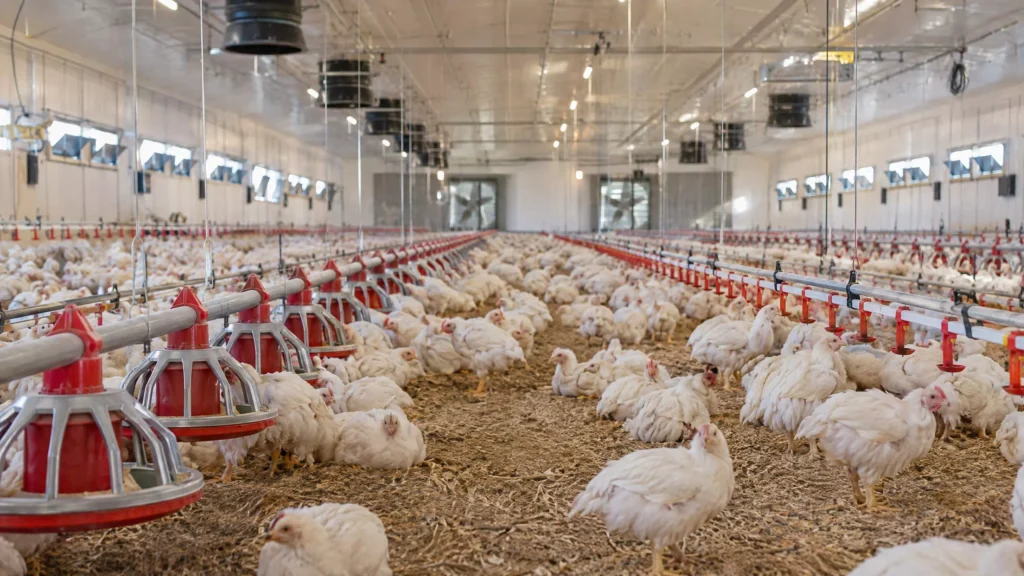
Feeders may be manual or automated, and the appropriate design depends on the bird type, flock size and house layout. In an automated system, check how feed moves from storage to the lines, how the line height is adjusted, and how operators can see whether feed is reaching the full length of the house.
Ask about cleaning access, wear parts, motor and control requirements, and what happens if a line stops. Feed delivery that is easy to inspect is usually more useful than a system that is difficult to troubleshoot during a busy production day.

Drinking systems

Water equipment should provide dependable access while limiting leakage. Ask how line pressure is regulated, how filters are serviced, and how the system is flushed or cleaned. Water quality and local mineral content matter; a drinker line needs routine inspection even when it is automated.
A small leak can wet litter or create persistent maintenance work. Include shutoff points, drainage and access for checking lines in the layout discussion. Match drinker type and line setup to the birds and the management guidance for the production system rather than relying on a generic bird-per-nipple figure.

Ventilation and environmental control

Fans and inlets are part of a system, not stand-alone purchases. Ventilation removes heat, moisture and unwanted gases while bringing in fresh air. In a mechanically ventilated house, fan capacity, inlet placement, house sealing and controller settings work together. Heating and cooling requirements vary with bird age, building design and local weather.

The University of Georgia’s broiler housing guide describes ventilation equipment as a combination of fans, air inlets, evaporative cooling and controls; it also notes that cold- and hot-weather operation require different approaches . A quotation should therefore be based on the house dimensions and climate, with control and alarm arrangements discussed alongside the fans.

Power reliability deserves its own line in the plan. Ask what alarms are available and whether backup power can support essential equipment during an outage. Confirm the farm’s electrical supply and the generator arrangement with qualified local professionals.

Egg collection and manure removal

For layer farms, egg belts and collection equipment can reduce repeated manual handling, but their path through the house matters. Check transfer points, access for cleaning, and how eggs move from the house to the next handling stage. The target is a workable flow with manageable breakage—not a promise that breakage can be eliminated.
Manure belts or other removal arrangements should be planned around house access, storage and the farm’s handling or disposal process. Clarify how often equipment needs to run, what routine cleaning involves, and which components are wear parts.

Housing and supporting equipment

Cages, floor systems, partitions, lighting, brooders, controls and alarms can affect how the rest of the equipment is installed and operated. Make sure the proposal identifies what is included and what is not. For example, a system quote may exclude building work, electrical installation, water treatment, feed silos or downstream egg handling.
Dawei’s describes a layer-cage configuration and supporting equipment. Treat product-page specifications as a starting point for discussion; have the supplier confirm the final layout, compatibility and specifications for your project in writing.

A useful way to compare poultry equipment proposals


What to compareQuestions to ask
Capacity and layoutIs the design based on the actual house drawing and flock plan?
Included equipmentWhich machines, controls, cables, pipes and accessories are included?
CompatibilityDo the feeder, drinker, ventilation and handling systems work together?
UtilitiesWhat power, water pressure, drainage and backup supply are required?
Cleaning and serviceCan staff reach components for inspection, flushing and repair?
SupportAre installation guidance, spare parts and after-sales support specified?
Ask for a marked-up layout rather than comparing quotations by headline price alone. Two offers may use similar equipment names but differ in controls, installation scope, accessories or commissioning support.

Common planning mistakes

Choosing by bird count alone. House length, width, bird age, climate and operating approach change the equipment needs.
•Treating automation as a substitute for daily checks. Sensors and controls help operators manage a house; they do not remove the need to inspect birds, water, feed flow and equipment.
•Ignoring maintenance access. Filters, motors, belts, fans and inlets need inspection. A component that cannot be reached safely can turn a small fault into downtime.
•Leaving out power failure planning. Ask about alarms, manual operation where applicable, and backup power for essential systems.
•Accepting vague scope. Get the equipment list, layout, installation boundaries, utility requirements and support terms in writing.
poultry equipment maintenance

A pre-purchase checklist

Before placing an order, gather a house drawing, bird type and target capacity, local climate information, available electrical and water details, and the intended daily workflow. Then ask the supplier to provide a proposed layout, equipment schedule, utility requirements, installation scope, commissioning plan, maintenance guidance and spare-parts information.
Dawei offers custom farm design and installation support according to its services page. If you are comparing a turnkey proposal with a supply-only quotation, confirm exactly which design, setup and after-sales tasks are covered.

Start with the type of poultry operation

Before requesting a quotation, write down the basics: bird type, flock size, production stage, house dimensions, local climate, available power and water, and how many workers can be on site each day. These details affect layout and capacity. A supplier cannot size a useful system from “for 20,000 birds” alone if the house design and management plan are unknown.
A layer operation may need a coordinated arrangement of cages or floor areas, feeding and drinking lines, egg collection, manure removal, lighting and environmental control. A broiler setup generally focuses on feeding, drinking, heating or brooding, ventilation and cooling, with equipment adjusted as birds gain weight. Breeder farms have their own handling and management requirements. Do not assume that one standard package suits all three.
Dawei lists across categories that include feeding, drinking, manure removal and climate control. Use the category page to identify the equipment scope, then confirm the specific configuration against your house plan and flock requirements.

Frequently Asked Questions

What equipment does a poultry farm need?

Most farms need equipment for feeding, drinking, housing and environmental management. Layer operations may also need egg collection and manure removal equipment. The final list depends on production type, building, climate and operating model.

Is poultry farming equipment different for broilers and layers?

Yes. Both systems need feed, water and suitable environmental conditions, but the housing and production workflow differ. Layers may require egg handling; broiler houses place particular attention on brooding, litter and ventilation as birds grow. Confirm the configuration against the flock and local management requirements.

Should a small farm automate every process?

Not necessarily. Compare the labor saved with the purchase, utility and maintenance requirements. Some farms may benefit from automating a frequent or labor-intensive task first, then expanding as the operation grows. Keep access to routine inspection and repair in the plan.

What should I send a supplier to get a useful quotation?

Send the house dimensions or drawing, bird type, target capacity, climate and utility information, plus any existing equipment that must be retained. Ask for an equipment schedule and marked-up layout, and clarify installation, commissioning, spare parts and support.

Conclusion

Good poultry equipment planning starts with the house and the work—not a catalog. Define the flock, map the daily process, check utilities and maintenance access, and compare proposals by their full scope. That approach makes it easier to choose farm poultry equipment that fits the operation today and can be serviced reliably over time.
For a project-specific layout or equipment list, contact Dawei’s poultry equipment team with your house drawing and flock details.

Leave a Comment

Your email address will not be published. Required fields are marked *